Member-Owner Spotlight | Vol. 1 | Luis Navarro
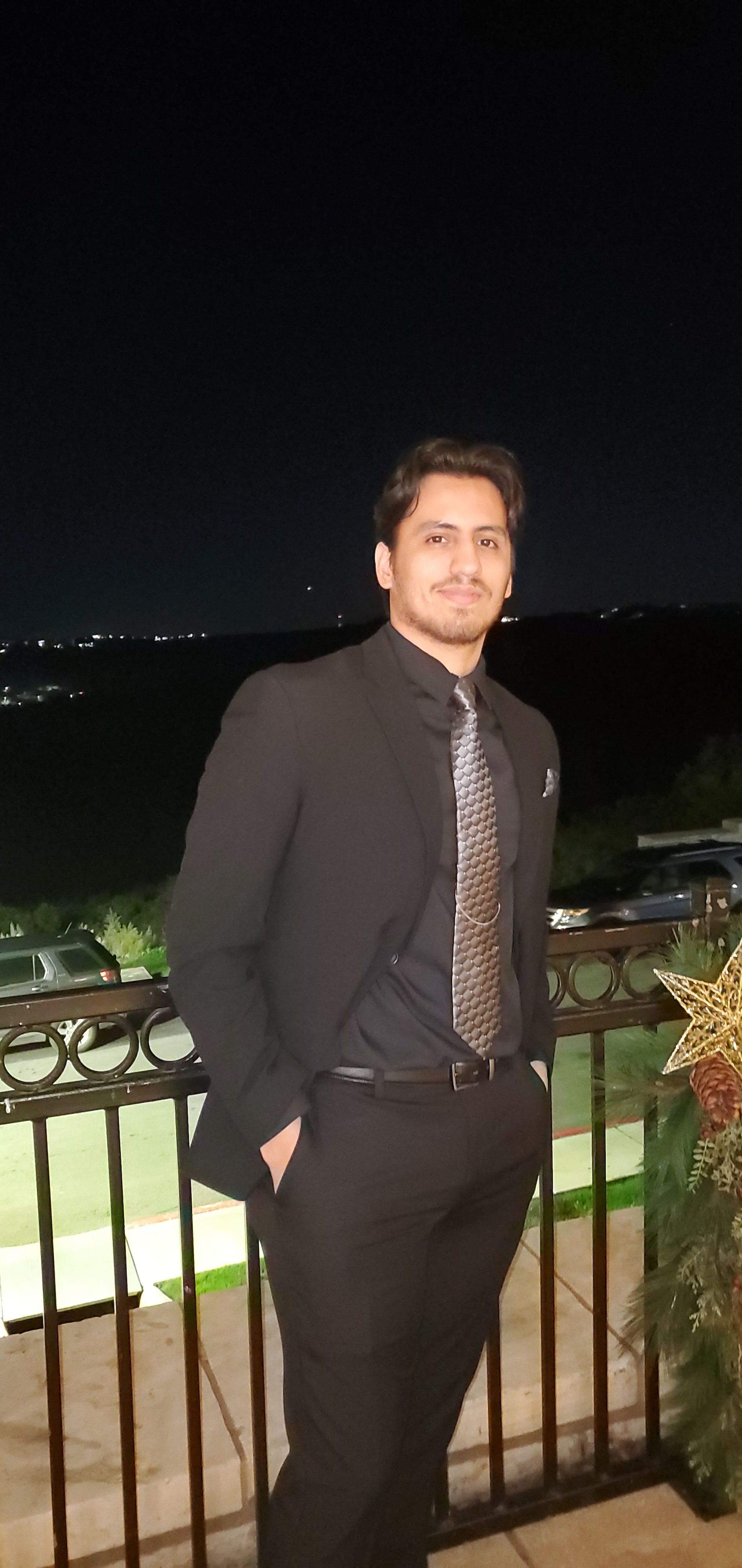
Luis Navarro didn't set out to be a software engineer. He set out to help a friend.
"I started by helping a friend with their website while I was in college," he says. "That's when I figured out that I was really good at what I do, and that I genuinely liked doing it."
That combination, real skill and genuine enjoyment, is rarer than it sounds in the tech industry. And it's part of what makes Luis a natural fit at Radiate Digital, the worker-owned agency where he now builds websites, custom applications, and integrated systems for nonprofits, cooperatives, and social enterprises.
But between that college dorm room and Radiate, there was a chapter of Luis figuring out what he didn't want from a tech career.
From Freelancer to Worker-Owner
After discovering his talent through that first project, Luis started building something of his own: a freelance practice. He got traction, built a client base, and developed a feel for what the work could be at its best, and what the industry often made it instead.
When the opportunity to join Radiate came along, it wasn't a hard decision. "I aligned with their values," he says simply. "And it allowed me to grow my business and career in ways that a typical 9-to-5 wouldn't have."
That last part, the liberty of it, is what he keeps coming back to.
Worker-owned cooperatives operate differently from conventional firms. At Radiate, there's no investor class extracting profit from the top. The people doing the work are the people who own the business, share in its success, and make decisions about its direction. For Luis, that structure wasn't just ideologically appealing. It was practically transformative.
"I get to decide how and when to work," he says. "That has allowed me to craft the life I want."
What "Crafting a Life" Actually Looks Like
When he's not building software, he's spending time with his family, playing soccer and rugby, traveling, reading, cooking new dishes, and yes, logging hours in video games. These aren't aspirational hobbies on a résumé. They're how he actually spends his time, because his work structure makes room for them.
"Work to live, not live to work," he says. It's a phrase that sounds simple until you've spent time in an industry that routinely asks engineers to do the opposite.
The conventional tech career path - long hours, always-on Slack, the implicit expectation that your identity is your output, is something Luis opted out of deliberately. The cooperative model gave him that option. And the life he's built in that space is the evidence.
The Real Cost of Bad Code (And Why Nonprofits Can't Afford It)
Luis works across a wide range of tools and technologies - "I can work with just about any tool," he says, but what excites him most are projects that introduce something new. The challenge of learning, adapting, and solving a problem with the right technology for the specific situation is where he does his best work.
The nonprofit tech landscape is full of decisions made under budget pressure, time pressure, or the constraints of whoever happened to be in the room when the site was built. Those decisions compound. What looks like a savings in year one often becomes a slow drain in years two, three, and beyond.
"Bad code causes constant issues that need to be fixed," Luis says. "And that requires time and resources."
This is what Luis means when he talks about sustainable, clean code. It's not an abstract engineering principle. It's a financial argument. A well-built system is one that your team can use without daily friction, that a future developer can understand and maintain without starting from scratch, and that doesn't quietly charge you in hours of frustration every month.
For nonprofits, organizations where every dollar and every staff hour has an opportunity cost measured in mission impact, technical debt isn't just an IT problem. It's a mission problem.
Why the Cooperative Model Makes Better Tech
There's a version of the software industry where the incentive is to build things that keep clients dependent, complex systems only the original developer can maintain, proprietary tools with no exit ramp, solutions optimized for recurring billing rather than client empowerment.
Luis works inside a model that runs the opposite direction. At Radiate, the measure of a good project isn't how much ongoing revenue it generates. It's how well it serves the organization that commissioned it. Worker-ownership aligns incentives with clients in a way that conventional agency structures often don't.
Clean, well-documented, standards-based code that another developer can read and build on. Integrations that use widely adopted tools rather than proprietary lock-ins. Recommendations made in the client's long-term interest, not the agency's short-term revenue interest. These aren't marketing claims, they're the natural outputs of a business model where the people doing the work also own the outcomes.
What's Next
Luis is most energized, he says, by projects that push him into new territory, new frameworks, new tools, new problems that don't have obvious solutions. In a field that evolves as fast as software development, that orientation toward learning isn't just a personality trait. It's a professional asset.
For the nonprofits and cooperatives that work with Radiate, it means their software engineer isn't just executing a familiar playbook. He's actively thinking about what the right solution is, for their specific situation, their specific constraints, and their long-term sustainability.
That's the architecture of ethical tech. Not just clean code for its own sake. But code built by someone who chose this work on purpose, in a structure that aligns his incentives with yours, and who measures success by how well it serves the mission, not how complicated it is to replace.
Luis Navarro is a software engineer and member-owner at Radiate Digital, a worker-owned agency building ethical technology for nonprofits, cooperatives, and social enterprises.
Want to work with Luis and the Radiate team?